
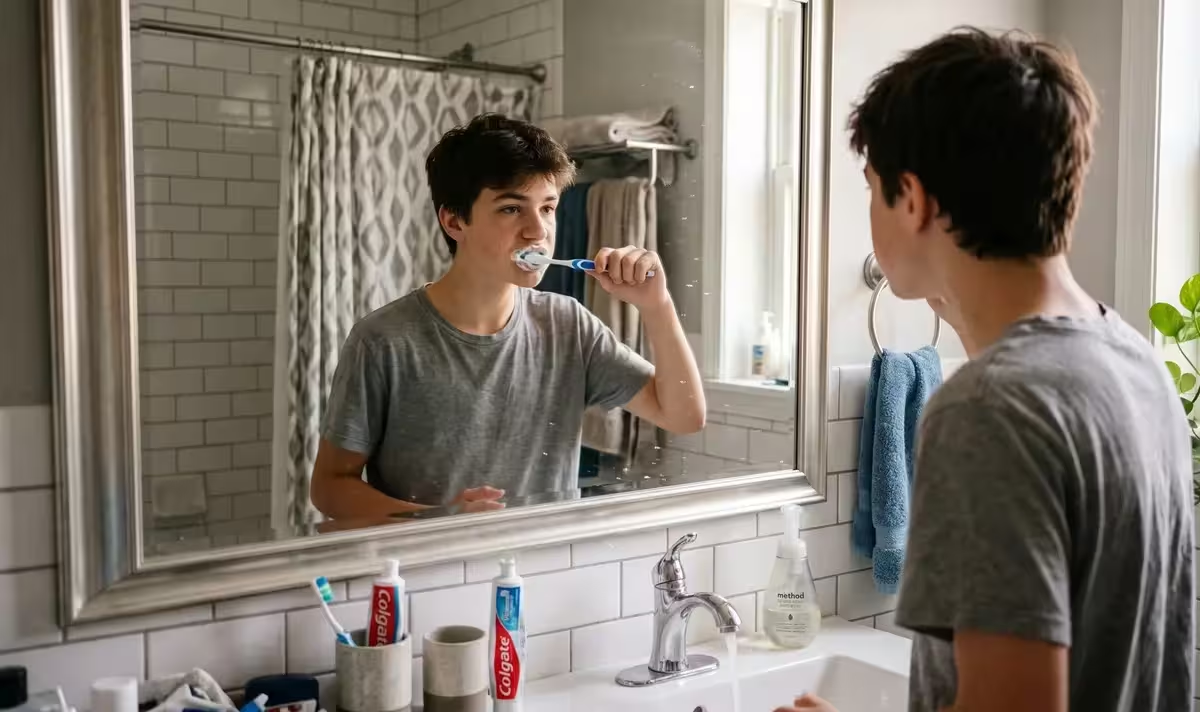
Most people know they should brush their teeth every day. But when Fresno patients are asked how long they actually brush, the answer is often: “I’m not sure.” Some people brush quickly before work, some rush through bedtime brushing, and others assume that brushing harder makes up for brushing shorter.
The real answer may surprise you: most patients should brush for two full minutes, twice a day with fluoride toothpaste. That recommendation is supported by the American Dental Association, which notes that brushing for two minutes helps achieve meaningful plaque removal. The CDC also recommends brushing well twice daily with fluoride toothpaste as part of good oral hygiene.
At Sonríe in Fresno, California, Dr. Silvia Donan often reminds patients that good brushing is not about speed or pressure. It is about time, technique, and consistency.
Why Two Minutes Matters
Two minutes may not sound long, but it can feel much longer than expected when you are standing at the sink. Many people brush for less than a minute without realizing it. The problem is that quick brushing often misses important areas, especially the back teeth, gumline, inside surfaces, and chewing surfaces.
Your mouth has several zones that need attention. If you divide your mouth into four sections—upper right, upper left, lower right, and lower left—you only get about 30 seconds per section during a two-minute brushing session. That is not much time, especially if you are trying to clean carefully.
Brushing for two minutes gives fluoride toothpaste more contact with your teeth and gives you enough time to remove plaque more effectively. Plaque is the sticky film of bacteria that builds up on teeth and can contribute to cavities, gum irritation, bad breath, and dental problems over time.
Brushing Longer Is Not Always Better
If two minutes is good, is five minutes better? Not necessarily.
Brushing too long, too hard, or with a stiff-bristled toothbrush can irritate your gums and wear down enamel over time. Some patients think aggressive brushing means cleaner teeth, but the opposite can happen. Hard brushing can contribute to tooth sensitivity, gum recession, and discomfort near the gumline.
A better approach is to use a soft-bristled toothbrush, gentle pressure, and small controlled motions. If your toothbrush bristles look flattened or frayed quickly, you may be brushing too hard.
At Sonríe, Dr. Silvia Donan can help you understand whether your brushing technique is helping your smile or causing unnecessary wear.
How Often Should You Brush?
For most patients, brushing twice a day is the standard recommendation: once in the morning and once before bed. Nighttime brushing is especially important because it helps remove plaque, food particles, and bacteria before you sleep.
When you skip brushing before bed, plaque can sit on your teeth overnight. Over time, this can increase the risk of cavities, gum inflammation, and bad breath.
Some patients may need extra guidance depending on their dental needs. For example, patients with braces, dental restorations, dry mouth, frequent cavities, or gum disease may need a more personalized home care routine.
Are You Brushing the Right Way?
The length of time matters, but technique matters just as much. A proper brushing routine should clean the front, back, and chewing surfaces of every tooth. It should also gently clean along the gumline, where plaque often collects.
A simple way to improve your brushing is to slow down. Start in one area of your mouth and move in an organized pattern instead of randomly brushing wherever the toothbrush lands. This helps prevent missed spots.
Electric toothbrushes can also help some patients because many have built-in timers. However, a manual toothbrush can work well too when used properly. The best toothbrush is one you use consistently and correctly.
What About Kids?
Children also need consistent brushing, but they often need help. Many kids do not have the coordination to brush thoroughly on their own, especially when they are young. Parents may need to supervise, guide, or assist until the child can brush effectively.
Family dentistry is important because children’s dental needs change as they grow. Baby teeth, permanent teeth, spacing, diet, fluoride use, and brushing habits all play a role in oral health.
At Sonríe in Fresno, Dr. Silvia Donan provides family dental care for children, teens, adults, and seniors, helping each patient build healthier habits at every stage of life.
When Brushing Is Not Enough
Even excellent brushing cannot remove everything. Plaque can harden into tartar, and tartar cannot be removed with a toothbrush at home. That is why regular dental cleanings are still important.
If you brush twice a day but still notice bleeding gums, bad breath, sensitivity, tooth pain, or swelling, it may be time to schedule a dental visit. These symptoms can be signs of gum disease, cavities, infection, or other dental concerns.
Sonríe offers comprehensive dental care in Fresno, including preventive care, family dentistry, emergency dental care, and walk-in dental care for patients who need attention quickly.
The Simple Rule Fresno Patients Can Remember
Brush for two minutes, twice a day, using fluoride toothpaste. Be gentle, be consistent, and do not rush.
That small daily habit can make a big difference in your oral health. And if you are unsure whether you are brushing correctly, your next dental checkup is the perfect time to ask.
At Sonríe, Dr. Silvia Donan and her team are here to help Fresno patients protect their smiles with practical guidance, preventive care, and compassionate dentistry for the whole family.